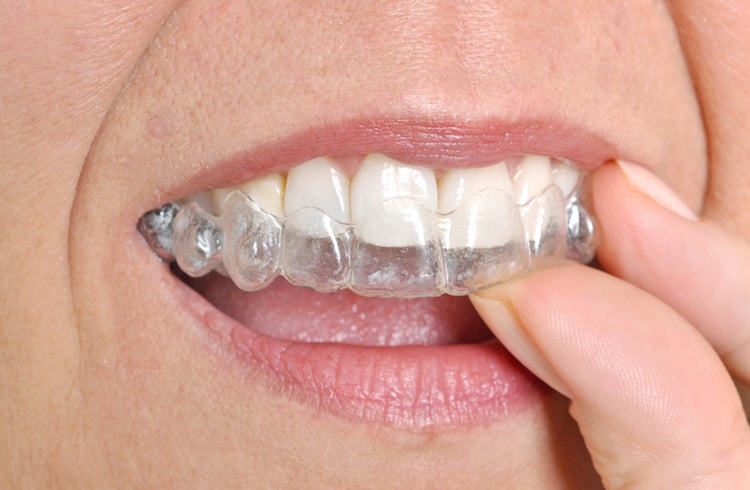
Most people know what Invisalign looks like: a series of clear, removable aligners worn over the teeth. But far fewer people understand what’s actually happening inside the mouth when those aligners are doing their job.
That gap matters. Patients who understand the mechanics behind the treatment tend to wear their aligners more consistently, follow instructions more carefully, and get better results. The science is genuinely interesting once you dig into it.
Here’s how it actually works.
The Biology of Tooth Movement
Teeth don’t move through solid bone. They move through a process that involves the bone itself responding to pressure by remodelling over time.
Each tooth sits in a socket lined with a thin layer of connective tissue called the periodontal ligament. This ligament connects the root of the tooth to the surrounding jawbone. When sustained pressure is applied to a tooth in a specific direction, it compresses the periodontal ligament on one side and stretches it on the other.
The body interprets this as a signal to remodel the bone:
- On the compression side, cells called osteoclasts break down bone to create space for the tooth to move into
- On the tension side, cells called osteoblasts deposit new bone to fill the space the tooth is moving away from
- This process is continuous and gradual throughout treatment
- The tooth moves incrementally as the bone rebuilds around its new position
This is the same biological process that happens with traditional braces. The difference with Invisalign is how that force is generated and controlled.
How Aligners Generate the Force
Each Invisalign aligner is manufactured to be slightly different in shape from the current position of the teeth. When you seat the aligner, it doesn’t fit perfectly. It fits the position the teeth are meant to be in, not where they are right now.
That slight discrepancy between where the teeth are and where the aligner wants them to be creates gentle, consistent pressure on specific teeth. The periodontal ligament responds, the bone remodels, and the teeth gradually shift into the aligner’s intended position.
Once the teeth reach that position, that aligner has done its job. The next aligner in the series is slightly different again, moving the teeth the next incremental step toward the final planned outcome.
The Role of ClinCheck Technology
Before a single aligner is made, your orthodontist uses Invisalign’s ClinCheck software to map out the entire treatment digitally. At Kelowna Orthodontics, this process starts with a scan using the iTero digital scanner, which builds a precise 3D model of the teeth without traditional moulds.
From that model, the orthodontist plans every stage of tooth movement, from the starting position to the final result. ClinCheck calculates:
- The number of aligners needed to complete treatment
- How much each tooth moves at each stage
- The sequence in which different teeth are moved
- The direction and degree of force applied at each step
This level of precision is what separates Invisalign from over-the-counter clear aligner products. The treatment plan is designed by a certified orthodontic specialist, not generated automatically by an algorithm without clinical oversight.
What Attachments Do
Not all tooth movements can be achieved by aligner pressure alone. Some movements, such as rotating a tooth or moving a root rather than just the crown, require additional help.
Attachments are small tooth-coloured composite shapes bonded to specific teeth at the start of treatment. They give the aligner surfaces to push or pull against that wouldn’t otherwise exist. Think of them as handles that allow the aligner to apply force in directions it couldn’t manage against a smooth tooth surface alone.
Patients sometimes find attachments surprising when they first hear about them. But they’re a normal part of many Invisalign treatment plans and don’t significantly affect the appearance of the aligners.
Why Wear Time Matters So Much
The bone remodelling process that moves teeth requires sustained, consistent pressure. Aligners only generate that pressure when they’re in the mouth.
Invisalign is designed to be worn 20 to 22 hours per day. That’s not a general guideline with some flexibility. It’s the minimum required to keep the biological process moving at the rate the treatment plan was designed around.
Common consequences of inconsistent wear include:
- Teeth that don’t reach the intended position before the next aligner is due
- Aligners that no longer fit properly, requiring refinements
- Extended treatment timelines
- In some cases, the need to restart stages of treatment
Patients who wear their aligners consistently tend to stay on track with their planned timeline. Patients who remove them frequently, especially for hours at a time, generally don’t.
Is Invisalign Right for Your Case?
Invisalign handles a wide range of orthodontic problems, including crowding, spacing, overbites, underbites, and crossbites. It’s used for adolescents and adults. But there are cases where traditional braces or a combination approach produces a better clinical result, and a certified orthodontic specialist is the right person to make that assessment.
Kelowna Orthodontics is a Preferred Invisalign Provider in Kelowna. Drs. Pollard, Diaz, and Kehler will review your case and give you an honest picture of whether Invisalign is the right fit, and if not, which alternative makes more sense.
Book a Free Invisalign Consultation in Kelowna
No referral is needed, and the initial consultation is free. The team uses iTero digital scanning, so there are no traditional impressions involved.
Learn more about Invisalign in Kelowna on the Kelowna Orthodontics website, or explore the full range of treatment options available at the clinic.
Call (250) 763-3312 or request your free consultation online. The clinic is at 102-1110 Harvey Ave, Kelowna, BC. Zero-interest payment plans are available.