You just heard that CDCP covers orthodontics now. So before you book anything, you want a straight answer for your own child. For most Kelowna families, that answer is no. Not the way it sounds on the news.
The Canadian Dental Care Plan does not cover routine or cosmetic braces for children. It does not cover Invisalign either. Coverage reaches only a narrow group of kids with a severe, functionally handicapping bite problem. A clinical scoring tool confirms that severity, and Sun Life, the plan’s administrator, approves it in advance. Most children who need treatment for crowding or spacing will not qualify, even once fully enrolled.
Dr. Diego Diaz sees this gap often. He is a Certified Specialist in Orthodontics at Kelowna Orthodontics. He also chairs Smiles 4 Canada’s B.C. region, a pro bono access program. His answer for families who do not qualify: zero-interest payment plans, built to make treatment affordable without CDCP in the picture at all.
Key takeaways for Kelowna parents weighing CDCP for braces
- CDCP orthodontic coverage applies only to children under 18 with a severe, functionally handicapping bite problem, not routine crowding.
- Approval needs pre-authorization through Sun Life, using a scoring tool called the Modified HLD Index.
- Most kids with crowding or a mild bite issue will not meet that threshold, even once fully enrolled.
- Kelowna Orthodontics offers a 5 percent discount for paying treatment in full, plus zero-interest plans for everyone else.
- Book a consultation to get a written cost estimate built around your own child’s teeth.
Why almost no child qualifies for CDCP orthodontic coverage
CDCP screens every orthodontic case through one tool. It’s called the Modified Handicapping Labio-Lingual Deviation Index, or the HLD Index for short. The HLD Index scores how much a bite problem affects chewing, speech, or jaw growth. It does not score how crowded or unattractive the teeth look. A child only scores high enough when the problem is functional, not cosmetic. A general dentist cannot make that call. Sun Life reviews the score on the government’s behalf. The orthodontist must submit full diagnostic records before any treatment starts.
Having CDCP coverage for cleanings or fillings does not carry over to orthodontics. Each benefit category runs on its own rules. Orthodontics sits in the strictest tier of the whole plan. A family can enroll fully in CDCP and still get a straightforward no for braces. CDCP targets severe functional cases only, not a straighter smile. That catches a lot of parents off guard. One approval letter can feel like it should cover everything that follows, but it doesn’t work that way here.
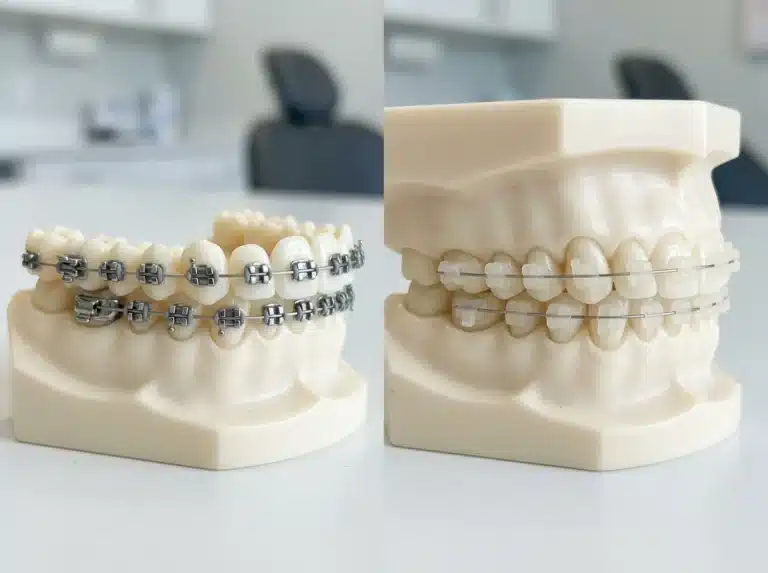
Once you know where CDCP lands for your child, the real question becomes what to do next. Kelowna Orthodontics reviews the full range of treatment options with you at that point. That includes traditional braces and clear aligners, plus newer options like LightForce’s 3D-printed brackets. You choose from real information instead of guessing what CDCP might approve.
What actually counts as a severe, functional case?
The HLD Index looks for specific, measurable problems, not general crookedness. Sun Life’s reviewers look for one or more of these signs in a child’s diagnostic records:
- A bite gap or overjet large enough to interfere with chewing or clear speech
- Teeth that are impacted and cannot erupt into place on their own
- A skeletal jaw discrepancy tied to a diagnosed craniofacial condition
- Crowding severe enough to trap food against the gums and cause repeated infection
- A crossbite pulling the jaw visibly off-centre as your child keeps growing
Ordinary crowding, gapped teeth, or a mild overbite do not meet this bar on their own. Most Kelowna kids who start treatment fall into that ordinary group. That is not a judgment on whether your child needs braces. It just means CDCP was not built to pay for that kind of case.
Your orthodontist checks for each of these signs at the first exam. This happens whether or not your family plans to pursue CDCP at all. It costs you nothing extra to find out. The exam also tells you how long treatment might take and what it will likely cost, CDCP or no CDCP. Most parents find that clarity is worth more than the wait for a maybe.
What can your family do if CDCP says no?
If your child does not qualify, Kelowna Orthodontics still has a plan for you. Families pay a smaller amount to start. Then they spread the rest across zero-interest monthly or quarterly installments. We never bring in a bank or an outside lender. Paying the full fee upfront earns a 5 percent discount off the total treatment cost. We set every plan during the visit, after an orthodontist reviews your child’s actual records instead of a general online estimate.
That first visit includes the same digital scans and x-rays your file would need for a CDCP pre-authorization request. So nothing about it goes to waste if your family wants to try that route too. A full visit runs about 50 minutes.
It covers photographs, a doctor’s exam, and a plan with real cost and timeline numbers attached. That is not just a verbal impression. Ask directly whether your child’s case has any realistic shot at CDCP approval. This is not a small decision for most families. Ask about the total cost, not just the down payment. A clear answer today beats a surprise bill later. The orthodontists at the practice answer that question for every new patient who raises it. They will tell you plainly if pre-authorization is worth the wait.
Getting your child evaluated in Kelowna
The only way to know where your child actually stands is a visit with a certified specialist. A general dentist cannot make this call on their own. Kelowna Orthodontics sees families from across the Okanagan, including Vernon, Penticton, and Merritt. You don’t need a referral to book that first visit, and the office keeps free parking on site for every patient who comes in.
Waiting on a CDCP decision can take weeks, and some families feel stuck deciding whether to start treatment now or hold off for an answer that may not come. Dr. Diaz encourages families not to let that uncertainty stall care your child needs regardless of the outcome. Growth windows for jaw and bite correction do not pause for paperwork, and a delayed decision can mean a longer treatment later.
Three certified specialists practise at this office: Dr. Pollard, Dr. Diaz, and Dr. Kehler. Each one reviews new patients personally, not a coordinator or an assistant. Our certified specialists walk you through the CDCP question at that very first visit, before you commit to anything.
If you are ready to find out exactly what CDCP will and will not cover for your child, call Kelowna Orthodontics at (250) 763-3312. Or book a consultation online, and the team will walk you through the real numbers first.