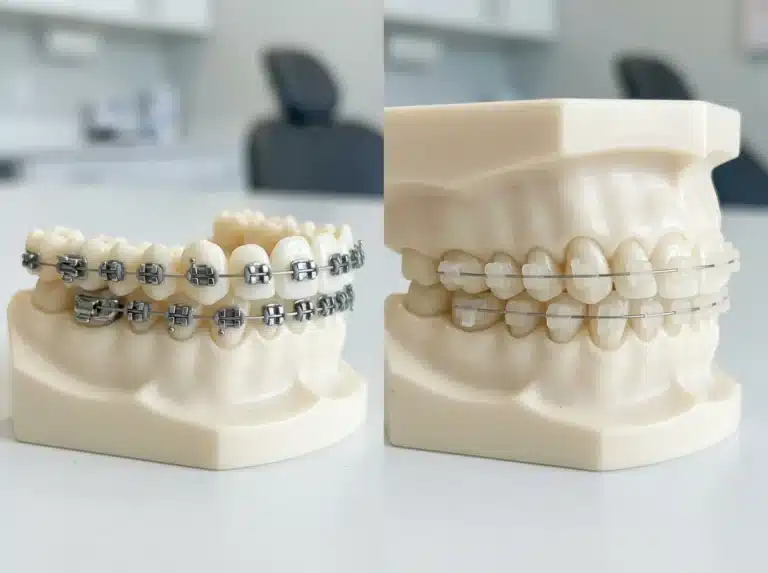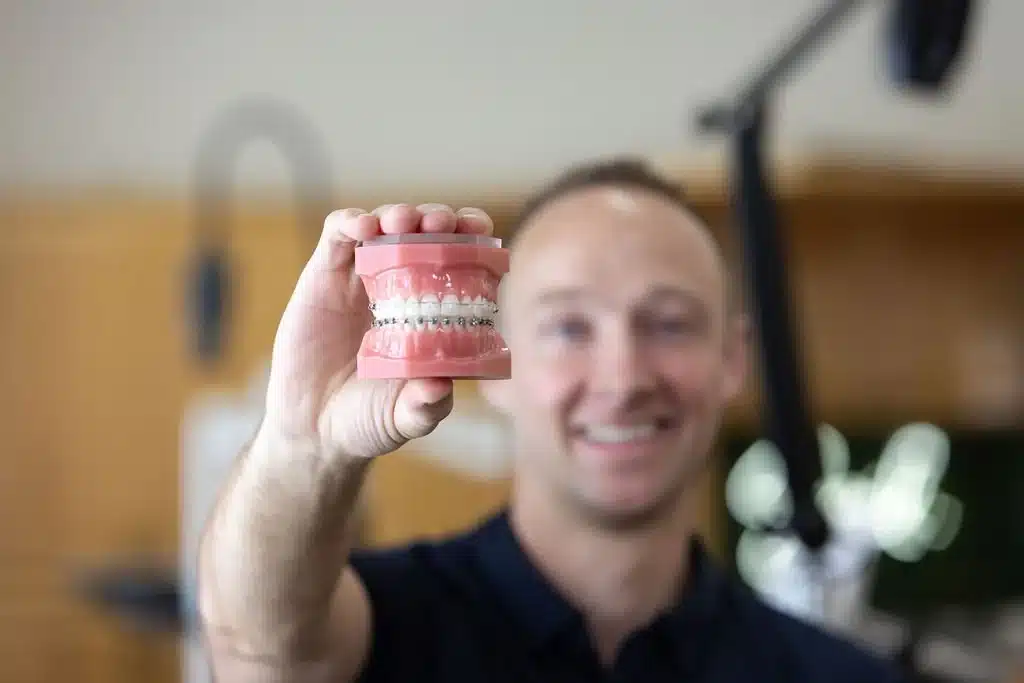
When most people think about braces in Kelowna, the image is usually the same: a teenager with metal brackets working toward straighter teeth. That’s accurate as far as it goes, but it’s a narrow picture of what orthodontic treatment actually addresses.
Braces work by applying controlled, sustained forces to the teeth and the bone that surrounds them. That mechanism can be used to correct a range of problems that go well beyond the alignment of individual teeth. Some of these issues affect how the bite functions, others affect jaw development, and some have direct consequences for long-term oral health if left untreated.
Here are seven problems that braces can address, along with why each one matters.
1. Overbite
An overbite refers to how much the upper front teeth overlap vertically with the lower front teeth. Some overlap is normal. A deep overbite, where the upper teeth cover a significant portion of the lower teeth when biting, can cause the lower front teeth to bite into the roof of the mouth over time.
Deep overbites can cause wear on the lower front teeth, discomfort in the gum tissue behind the upper teeth, and, in more pronounced cases, jaw joint stress. Braces can address a deep overbite by intruding the front teeth and sometimes extruding the back teeth to change the vertical relationship of the bite.
2. Underbite
An underbite occurs when the lower front teeth sit in front of the upper front teeth when the mouth closes. This can result from the lower jaw growing further forward than the upper jaw, from upper teeth that are too far back, or from a combination of both.
Beyond appearance, an underbite affects how the teeth function. It places unusual forces on the front teeth and can contribute to uneven wear. In younger patients, early orthodontic intervention can guide jaw development before the skeletal pattern becomes fixed. In adults, braces can address the dental component of an underbite, though significant skeletal discrepancies may require a combination of orthodontics and jaw surgery.
3. Crossbite
A crossbite occurs when one or more upper teeth sit inside the lower teeth rather than outside them. This can affect a single tooth, a group of teeth, or the entire arch. A posterior crossbite, affecting the back teeth, can cause the jaw to shift to one side when biting down. Over time, this asymmetrical loading can affect jaw joint function and facial symmetry.
Braces can move individual teeth or groups of teeth to correct a crossbite. In younger patients, expansion appliances may be used alongside braces to widen the upper arch before the palatal suture fully fuses.
4. Open Bite
An open bite means the upper and lower teeth don’t make contact in a certain area when the mouth is closed. An anterior open bite, where the front teeth don’t touch, is the most common type. This can affect speech, make biting into food difficult, and place more load on the back teeth than they’re designed to handle.
Open bites can develop from prolonged thumb sucking, extended pacifier use, or tongue posture habits. Braces can address the dental component of an open bite by moving teeth into better contact. In some cases, orthodontic appliances that influence tongue posture are used alongside braces.
5. Spacing and Gaps
Gaps between teeth are sometimes purely an aesthetic concern, but they can also create functional issues. Food tends to pack into spaces between teeth during eating, which increases the risk of gum irritation and decay in those areas. Significant gaps can also affect speech, particularly sounds that require the tongue to contact the back of the upper front teeth.
Braces close spaces by moving teeth together and distributing them evenly across the arch. The approach depends on whether the spacing is due to missing teeth, small teeth relative to arch size, or other factors, so the treatment plan will vary.
6. Crowding
Crowding occurs when there isn’t enough space in the arch for all the teeth to align properly. Crowded teeth are more difficult to clean effectively. Areas where teeth overlap are harder to reach with a toothbrush and nearly impossible to floss through properly, which creates conditions that favour plaque accumulation, decay, and gum disease over time.
Correcting crowding with braces creates properly spaced teeth that are accessible for cleaning. This isn’t just an aesthetic improvement. It’s a change that can have real implications for long-term oral health if left unaddressed.
7. Jaw Development Issues in Growing Patients
For children and younger adolescents, orthodontic treatment can do something that isn’t possible once skeletal growth is complete: influence how the jaws develop. Early orthodontic treatment, sometimes called Phase 1 treatment, is used selectively in situations where a developing jaw problem would be significantly harder to correct after growth finishes.
Kelowna Orthodontics offers early treatment evaluations for children, typically recommended around age 7 or 8. Not every child needs early intervention, but for those who do, addressing jaw development problems during growth can reduce the complexity of treatment later.
Wondering how to find the right provider for this kind of care? Our post on How to Choose the Right Orthodontist for Braces in Kelowna covers what to look for when selecting an orthodontic specialist.
Braces vs. Invisalign for These Problems
Most of the issues described above can be addressed with either traditional braces or clear aligners like Invisalign, depending on the severity and specifics of the case. Some bite correction scenarios respond well to either option. Others, particularly those involving significant vertical or skeletal components, may be more predictably managed with braces.
Kelowna Orthodontics also offers LightForce clear braces, a fully customized bracket system that combines the precision of traditional braces with a less visible profile. A consultation with one of the orthodontists will clarify which treatment path fits the specific problem being addressed.
About Kelowna Orthodontics
Kelowna Orthodontics is located at 102-1110 Harvey Ave, Kelowna, BC, and serves patients across the Central Okanagan from Penticton to Vernon. The practice is led by three certified specialists in orthodontics: Dr. Derek Pollard, Dr. Diego Diaz, and Dr. Jessica Kehler. No referral is required, and zero-interest payment plans are available.
Book a Free Consultation at Kelowna Orthodontics
If you have questions about whether braces could address a bite concern, jaw alignment, or other orthodontic issue, the team at Kelowna Orthodontics offers free consultations with no referral needed.
Call (250) 763-3312 to book your appointment.
- Book a free braces consultation at Kelowna Orthodontics
- Call us to discuss bite correction, crowding, or jaw alignment concerns
- Schedule an orthodontic assessment for yourself or your child in Kelowna
- Contact Kelowna Orthodontics to ask about braces, Invisalign, or early treatment
- Request your free consultation at our Harvey Ave location today